



Puerto Escondido’s transformation into one of Oaxaca’s premier coastal destinations has attracted international attention from property buyers and real estate investors. However, the recent impacts of Hurricane John in September 2024 and Hurricane Erick in June 2025 have brought critical questions to the forefront: How does hurricane season affect property values? What construction standards protect investments? And most importantly, how can buyers make informed decisions in this dynamic coastal market?
Understanding Hurricane Risk in Puerto Escondido
Puerto Escondido sits along Mexico’s Pacific coast where hurricane season officially runs from June through November, with peak activity typically occurring between August and October. Unlike the Caribbean or Gulf of Mexico regions that face annual hurricane threats, direct strikes on the Oaxacan coast have historically been less frequent—making the recent back-to-back impacts of Hurricanes John and Erick particularly significant for real estate considerations.
According to NOAA’s National Hurricane Center, Hurricane John made landfall near Punta Maldonado in September 2024 as a Category 3 storm with sustained winds of 120 mph, bringing extraordinary rainfall of 10-20 inches across coastal Oaxaca and Guerrero. Just months later in June 2025, Hurricane Erick struck as another Category 3 hurricane with 125 mph winds, demonstrating what climate scientists increasingly recognize: rapid intensification of tropical systems due to warming ocean temperatures.
Recent Storm Impacts on Puerto Escondido
Both hurricanes brought life-threatening conditions to Puerto Escondido, including storm surge, flash flooding, and powerful winds. Businesses along the beaches closed temporarily, authorities evacuated thousands of residents to shelters, and infrastructure experienced significant stress from the heavy rainfall and wind damage. Power outages, road closures, and flooding affected multiple neighborhoods, particularly areas closer to sea level and river valleys.
However, Puerto Escondido’s built environment demonstrated resilience compared to other affected regions. Modern construction in neighborhoods like La Punta, Zicatela, and Rinconada generally withstood the storms better than older structures, highlighting the critical importance of building codes and construction quality in coastal real estate investment decisions.
How Hurricane Season Affects Puerto Escondido Property Values
The relationship between hurricane risk and real estate values is complex and nuanced. Data from INEGI (Instituto Nacional de Estadística y Geografía) shows that Mexico’s coastal property markets have demonstrated remarkable resilience, with Puerto Escondido specifically experiencing 18-22% property value appreciation in key neighborhoods during 2024-2025, even with hurricane impacts.
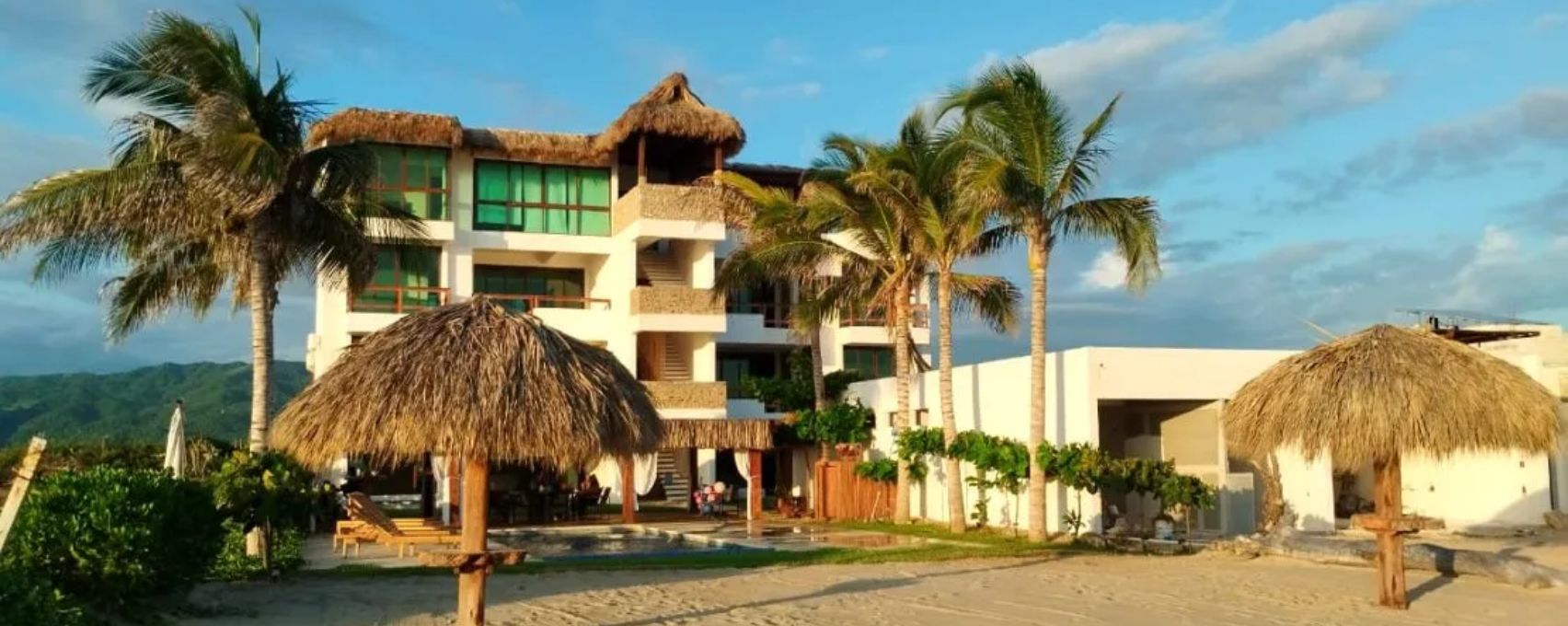
Immediate Post-Storm Market Effects
Following Hurricane John and Hurricane Erick, Puerto Escondido’s real estate market experienced temporary slowdowns rather than crashes. Transactions paused for several weeks during recovery efforts, with buyers and sellers waiting for damage assessments, insurance evaluations, and infrastructure restoration. Properties with verified structural integrity and minimal damage returned to market quickly, while those requiring significant repairs faced longer delays and price adjustments.
Interestingly, well-constructed properties that weathered the storms without major damage often gained perceived value, as they demonstrated resilience that buyers increasingly prioritize. Hurricane-resistant features became significant selling points, commanding premium pricing in subsequent transactions.
Long-Term Market Resilience
Puerto Escondido’s real estate market has shown strong recovery patterns following both recent hurricanes. Tourism returned rapidly—a critical factor since vacation rental income drives significant property demand. The 35% tourism growth reported for 2024 continued into 2025 despite the storms, supported by Puerto Escondido’s growing reputation as a world-class surf destination and digital nomad hub.
Property appreciation trends resumed within months of each hurricane. Beachfront properties in premium locations like La Punta and Carrizalillo maintained strong values, while inland properties in Bacocho and the airport corridor actually accelerated appreciation as buyers sought hurricane-protected locations with proximity to coastal amenities.
| Market Indicator | Pre-Hurricane John (Aug 2024) | Post-Erick Recovery (Nov 2025) | Change |
|---|---|---|---|
| Average Days on Market | 45-60 days | 50-65 days | Slight increase |
| Beachfront Premium Properties | Strong demand | Strong demand with resilience premium | Enhanced value for hurricane-resistant features |
| Vacation Rental Occupancy | 85%+ in prime areas | 80-85% (recovering) | Temporary dip, strong rebound |
| New Construction Activity | High volume | Moderate with enhanced standards | Quality-focused development |
Construction Standards and Hurricane-Resistant Real Estate
Mexico’s building code framework differs significantly from countries like the United States, where national standards apply uniformly. According to industry sources, Mexican municipalities establish their own construction regulations, with coastal states like Oaxaca showing varying levels of regulatory oversight. While Mexico City must update structural design standards every six years following the 1985 earthquake devastation, coastal hurricane preparedness standards remain less consistently enforced.
Current Building Standards in Puerto Escondido
The CFE (Comisión Federal de Electricidad) Manual provides guidance for wind and seismic design in Mexico, with recommendations that coastal commercial buildings should resist specific wind speeds based on location. However, these recommendations don’t always match the 200+ mph gusts that Category 4-5 hurricanes can generate during rapid intensification events like those experienced with Hurricanes John and Erick.
Progressive developers in Puerto Escondido have begun implementing enhanced construction standards that exceed minimum requirements:
- Reinforced concrete construction: Using higher-grade materials and structural engineering to resist hurricane-force winds and seismic activity
- Hurricane-resistant roofing systems: Metal roofing with proper attachment systems designed to withstand sustained high winds
- Impact-resistant windows and doors: Laminated glass and reinforced door systems that protect against wind-borne debris
- Elevated foundations: Construction above base flood elevation to protect against storm surge and heavy rainfall flooding
- Proper drainage systems: Engineered water management to prevent flooding and structural water damage
- Emergency power systems: Backup generators and solar installations with battery storage for post-storm resilience
Identifying Hurricane-Resilient Properties
When evaluating Puerto Escondido real estate, international buyers should prioritize properties that demonstrate structural resilience. Key questions to ask during property viewings include:
- What construction methods and materials were used? Reinforced concrete substantially outperforms wood frame or basic masonry.
- When was the property built? Newer construction typically incorporates better engineering standards.
- How did the property perform during Hurricanes John and Erick? Documented storm performance provides valuable real-world data.
- What elevation is the property situated at? Higher-elevation properties face reduced flood risk from storm surge and heavy rainfall.
- Does the property have proper drainage and water management systems? Critical for preventing flood damage during intense rainfall events.
- Are windows and doors impact-rated? Essential protection against hurricane-force winds and flying debris.
Insurance Considerations for Puerto Escondido Property Owners
Property insurance in Mexico operates differently than in countries with established catastrophic insurance markets. Traditional Mexican property insurance policies often provide limited hurricane coverage, and dedicated wind/storm coverage can be expensive and difficult to obtain in coastal areas.
Available Insurance Options
International property owners in Puerto Escondido typically pursue one of several insurance strategies:
- Mexican insurance providers: Companies like GNP Seguros, Qualitas, and AXA México offer property insurance with varying levels of hurricane coverage. Premiums increased following the 2024-2025 hurricane season, particularly for beachfront properties.
- International policies: Some international insurers provide coverage for Mexican properties, though availability varies and premiums tend to be higher.
- Self-insurance: Property owners with substantial resources sometimes choose to self-insure, setting aside capital reserves for potential storm damage rather than paying premium costs.
- Hybrid approaches: Combining basic Mexican property insurance with international umbrella policies or specialized catastrophic coverage.
Insurance and Property Values
The ability to secure comprehensive insurance increasingly affects property marketability. Properties that can demonstrate insurability—through construction quality, elevation, storm protection features, and documented resilience—command premium values. Conversely, properties with insurance challenges may face reduced buyer interest, particularly from foreign investors who prioritize risk management.
Strategic Investment Considerations During Hurricane Season
Hurricane season creates both challenges and opportunities for real estate investors in Puerto Escondido. Understanding these dynamics enables strategic decision-making that can enhance investment returns while managing risk appropriately.
Timing Investment Decisions
The real estate market shows distinct patterns related to hurricane season timing:
- Pre-season (April-May): Peak market activity as sellers aim to close transactions before hurricane season begins and buyers seek to complete purchases for summer rental income.
- Early season (June-July): Market activity continues but with increased caution; serious buyers can sometimes negotiate better terms as seller motivation increases.
- Peak season (August-October): Transaction volume typically decreases as both buyers and sellers adopt wait-and-see approaches; however, this creates opportunities for cash buyers willing to accept some weather uncertainty.
- Post-season (November-March): Market activity accelerates again, with properties that successfully weathered the season often commanding premium pricing due to demonstrated resilience.
Neighborhood Selection and Hurricane Risk
Different Puerto Escondido neighborhoods present varying hurricane risk profiles that investors should carefully evaluate:
| Neighborhood | Elevation Profile | Hurricane Risk Factors | Investment Considerations |
|---|---|---|---|
| Zicatela | Low to moderate elevation, beachfront exposure | Direct ocean exposure, potential storm surge, high winds | Strong rental demand, require hurricane-resistant construction, insurance considerations critical |
| La Punta | Moderate elevation, protected bay location | Some wind exposure, reduced storm surge risk vs. open ocean | Premium values, luxury market, quality construction standards |
| Rinconada | Elevated hillside positions | Wind exposure on exposed lots, minimal flood risk | Ocean views with reduced water hazards, strong appreciation potential |
| Carrizalillo/Bacocho | Mixed elevations, protected cove areas | Variable based on specific location, generally lower than open beach | Family-oriented market, balanced risk profile |
| Airport Corridor | Inland, higher elevation | Minimal hurricane impact, primarily rainfall concerns | Emerging appreciation, reduced insurance costs, growing demand |
Climate Change and Future Hurricane Patterns
Scientific consensus points to increasing hurricane intensity and rapid intensification events as ocean temperatures continue rising. Both Hurricane John and Hurricane Erick demonstrated extreme rapid intensification—strengthening from tropical storms to major hurricanes in just 24 hours—a pattern that challenges traditional storm preparation timelines and construction standards.
For Puerto Escondido real estate investors, this evolving climate reality underscores several key considerations:
- Construction quality and hurricane resistance will become increasingly important to property values
- Insurance availability and pricing will likely continue evolving, potentially affecting certain property segments more than others
- Properties demonstrating resilience through actual storm events will command premium pricing
- Infrastructure investments in drainage, flood control, and emergency response systems will significantly influence neighborhood desirability
- Elevated and inland properties may see accelerated appreciation as buyers factor hurricane risk into location decisions
Preparation and Property Management Best Practices
Whether purchasing for personal use or investment, property owners can implement strategies that protect both physical assets and financial returns during hurricane season:
Pre-Season Preparation
- Conduct comprehensive property inspections identifying potential vulnerabilities
- Ensure proper maintenance of roofing systems, window seals, and drainage infrastructure
- Develop and test hurricane preparation protocols with property managers
- Maintain updated insurance documentation and emergency contact information
- Install or verify operation of storm shutters, impact-resistant coverings, or similar protection systems
During Storm Threats
- Monitor official weather forecasts from reliable sources like CONAGUA (Comisión Nacional del Agua)
- Communicate proactively with property managers and tenants about preparation and evacuation procedures
- Secure outdoor furniture, equipment, and any potential wind-borne objects
- Document property condition with photographs before storm arrival for insurance purposes
- Ensure backup power systems are functional and fueled
Post-Storm Recovery
- Conduct thorough damage assessments documenting all impacts with photographs
- Initiate insurance claims promptly with comprehensive documentation
- Prioritize structural repairs and water intrusion remediation to prevent secondary damage
- Communicate transparently with vacation rental guests about property status and availability
- Consider upgrades and improvements during repair processes to enhance future resilience
The Opportunity in Resilience-Focused Investment
While hurricane season presents legitimate challenges for coastal real estate markets, Puerto Escondido’s strong fundamentals—including infrastructure improvements like the Barranca Larga-Ventanilla highway, international flight connections, and sustained tourism growth—continue driving long-term appreciation despite periodic storm impacts.
The 2024-2025 hurricane season has effectively created a market segmentation between older, vulnerable properties and newer, resilient construction. This divergence presents opportunities for informed investors who can identify and prioritize hurricane-resistant properties that will command premium values in an increasingly climate-conscious real estate market.
Properties that successfully weathered Hurricanes John and Erick without significant damage have demonstrated real-world resilience that no inspection or engineering report can fully replicate. This documented storm performance adds tangible value that sophisticated buyers increasingly recognize and reward through higher purchase prices and stronger rental demand.
Making Informed Decisions in Puerto Escondido’s Coastal Market
Hurricane season is an undeniable reality for Puerto Escondido real estate, but it shouldn’t deter well-informed investment decisions. The key lies in understanding risk factors, prioritizing construction quality, securing appropriate insurance, and recognizing that premium pricing for resilient properties reflects rational market valuation rather than excessive caution.
The most successful Puerto Escondido real estate investors approach hurricane season as one factor among many in comprehensive due diligence—alongside location, rental income potential, construction quality, legal documentation, and long-term appreciation prospects. By building resilience into property selection criteria and management practices, investors can confidently participate in one of Mexico’s most dynamic coastal real estate markets while appropriately managing the natural hazards inherent to paradise.
For those considering Puerto Escondido real estate investment, working with experienced local professionals who understand both market dynamics and hurricane preparedness is essential. The combination of strategic property selection, quality construction standards, proper insurance, and effective property management creates a foundation for successful coastal real estate investment that weathers both storms and market cycles.
Are you ready to explore hurricane-resilient investment opportunities in Puerto Escondido? Discover our curated selection of properties built to the highest construction standards, or explore our comprehensive real estate guides for deeper insights into investing along Oaxaca’s stunning Pacific coast.
Disclaimer: This article provides general information about hurricane season and real estate considerations in Puerto Escondido, Mexico. It should not be construed as professional investment advice, insurance guidance, or construction expertise. Prospective property buyers should conduct thorough due diligence, consult with qualified real estate professionals, structural engineers, insurance specialists, and legal advisors before making any investment decisions. Hurricane risks, insurance availability, and construction standards can change; readers should verify current conditions with local authorities and industry professionals.