



Puerto Escondido is no longer just a surfer’s secret. Over the past several years, growing numbers of Canadians, Americans, Europeans, and remote workers have been buying property along this stretch of Oaxacan coastline — from laid-back La Punta to the hillside developments above Bacocho and the emerging lots near Barra de Colotepec. What surprises many first-time buyers is not the legal process of buying in Mexico — they’ve usually researched the fideicomiso and the notario — but rather the practical question that follows closing: how do I actually manage money here? This guide covers everything a property owner in Puerto Escondido needs to know about local banking, opening accounts, sending international funds, and staying compliant with Mexico’s financial regulations.
The Banking Landscape in Puerto Escondido
Puerto Escondido is a mid-sized coastal town within the municipality of San Pedro Mixtepec, Oaxaca. While it punches well above its weight in terms of tourism, hospitality investment, and real estate activity, its banking infrastructure reflects its size. Branches are concentrated in the Centro neighborhood along Avenida Hidalgo and Avenida Oaxaca, within walking distance of the Mercado and the main bus terminal.
For property owners, whether they reside here full-time or manage a vacation rental from abroad, knowing which institutions are available locally — and what each offers — is essential before the closing paperwork is even signed.
Banks with Branches in Puerto Escondido
| Bank | Branch Location (Puerto Escondido) | Notes for Foreign Clients |
|---|---|---|
| Banorte | Av. Hidalgo 104, Centro | Mexico’s largest domestic bank; strong local presence; often requires residency to open personal accounts |
| HSBC | Centro (Av. Juárez 44) | International bank; extended hours; English-language support at select branches; relatively expat-friendly |
| Scotiabank | Av. Oaxaca 105, Centro | Canadian-owned; useful for Canadian property buyers; ATM network available |
| Banamex (now rebranded after Citi spin-off) | Centro area | One of the largest branch networks in Mexico; 9,000+ ATMs nationally; wide account variety |
| Banco Azteca | Carr. Internacional 2002 | Accessible for underserved clients; basic accounts; not ideal for high-value property transactions |
For buyers requiring more sophisticated services — investment accounts, multi-currency cards, or specialized expat support — Intercam Banco is worth researching, though it does not currently maintain a branch in Puerto Escondido itself. Its services focus precisely on foreign residents in coastal tourist destinations, and it accepts tourist visas as sufficient immigration documentation to open an account.
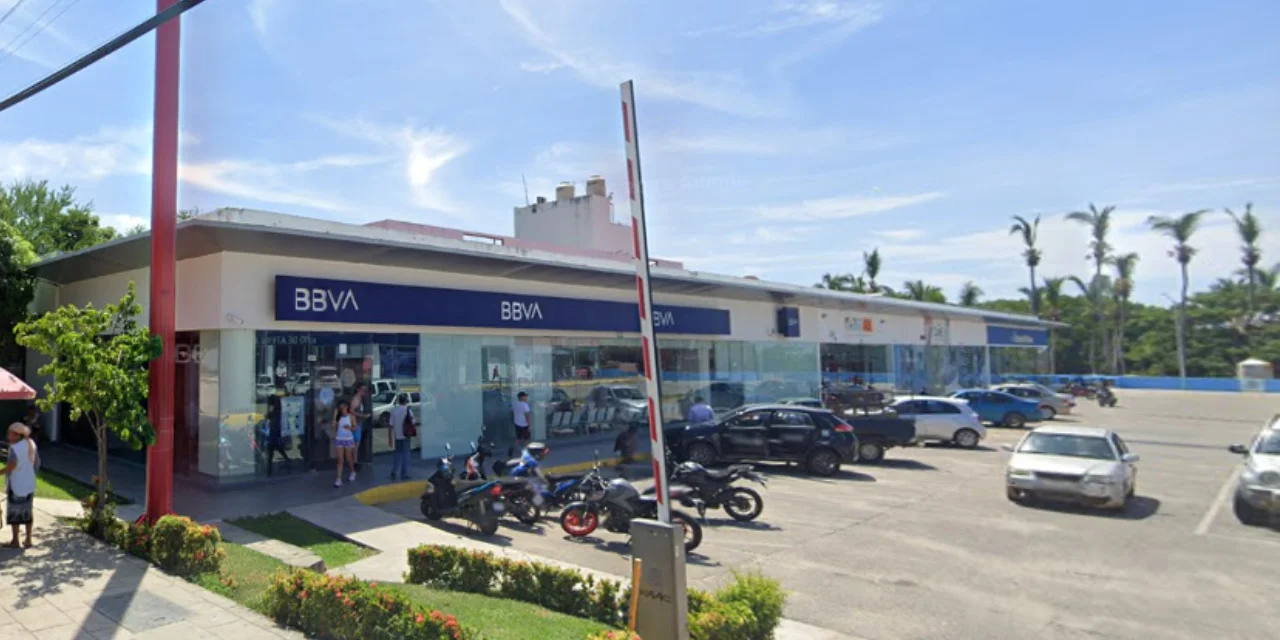
For large international transactions related to property, BBVA México and Santander are widely recommended by real estate attorneys and notarios, as both offer robust international wire transfer capabilities and extensive SPEI infrastructure. BBVA, in particular, enables international transfers to over 30 countries. The nearest BBVA branch with full services is in Pochutla, roughly 70 km east of Puerto Escondido.
Opening a Bank Account in Mexico as a Foreign Property Owner
One of the most common frustrations among foreign buyers in Puerto Escondido is discovering that buying the property was somehow easier than opening a bank account afterward. Mexican banking regulations are strict, partly because the country’s financial system is supervised by the Comisión Nacional Bancaria y de Valores (CNBV) and must comply with stringent anti-money-laundering (AML) requirements. That said, it is entirely possible for foreigners — including non-residents — to open accounts, provided they have the right documentation.
What Documents Will You Need?
Requirements vary slightly between banks, but the standard set of documents for a foreign individual includes:
- Valid passport (original and copy)
- Immigration document — tourist visa (FMM), temporary residency card (tarjeta de residente temporal), or permanent residency card
- Proof of address — a utility bill, rental agreement, or property deed issued within the past three months; this can be a Mexican address or, at some banks, a foreign address
- Mexican mobile phone number — required for two-factor authentication and online banking
- RFC (Registro Federal de Contribuyentes) — Mexico’s tax ID; not always mandatory at account opening but banks increasingly require it, and your notario will need it for property transactions
Some banks may also request character references from non-family members. Carrying multiple photocopies of each document significantly speeds up the process. Certain institutions will ask for a modest initial deposit to activate the account.
Residency Status and Its Impact
While it is technically possible to open an account with only a tourist visa at some institutions (Intercam Banco being a notable example), the majority of Mexican banks require at least a temporary residency card. If you are purchasing a property in Puerto Escondido — whether a beachfront condo in Zicatela, a villa in Carrizalillo, or a land plot in Rinconada — obtaining temporary or permanent residency before account opening makes the entire process far smoother. Owning property in Mexico, having family ties in the country, or running a business here can serve as qualifying grounds for residency, according to immigration rules.
RFC: Your Tax ID Is Non-Negotiable
The RFC is issued by Mexico’s tax authority, the SAT (Servicio de Administración Tributaria). Foreign individuals can obtain one using their passport and immigration documents, either in person at a SAT office or, in some cases, online. Your notario will require it when drafting the escritura (title deed), and it appears on every invoice, tax return, and formal financial transaction you conduct in Mexico. Getting your RFC sorted before your property closing will save you considerable time and stress.
SPEI, CLABE, and How Money Moves in Mexico
Once you have a Mexican bank account, understanding how domestic transfers work is essential — particularly for managing rental income, paying property management fees, utility bills, impuesto predial (property tax), and notary-related costs.
SPEI: Mexico’s Interbank Transfer System
The SPEI (Sistema de Pagos Electrónicos Interbancarios) is Mexico’s real-time gross settlement system, operated by the Banco de México. Almost all Mexican banks participate in it, and it is the standard method for transferring money between accounts. Key features:
- Real-time processing — transfers usually complete within seconds or minutes
- 24/7 availability — works on weekends and public holidays
- High transaction limits — suitable for large real estate-related payments
- Low cost — significantly cheaper than international wire transfers
- Secure and traceable — each transaction is logged within the Banco de México system
Property owners in Puerto Escondido use SPEI for nearly everything: paying property managers, settling notary invoices, distributing rental income from vacation rental platforms, and handling maintenance contractors. If you are managing a villa or house as a vacation rental in La Punta or Bacocho, having a Mexican bank account connected to SPEI is not optional — it is a practical necessity.
CLABE: Your 18-Digit Account Identifier
The CLABE (Clave Bancaria Estandarizada) is the 18-digit standardized number that identifies your Mexican bank account within the SPEI system. It is what you share when someone needs to send you money electronically within Mexico. Every Mexican bank account has one. When your property management company sends you your rental income, when your notario requests a fee payment, or when you pay your property tax online — all of these go through your CLABE. Always verify CLABE numbers carefully before initiating large transfers, as errors are difficult to reverse once processed.
Sending Money from Abroad: International Transfers and Property Purchases
For most foreign buyers purchasing property in Puerto Escondido, the single largest banking challenge is getting funds from their home country to Mexico safely, legally, and at a reasonable exchange rate. Whether you are buying a beachfront condominium or a commercial property with hotel or hospitality potential, this process requires careful coordination with your notario, your Mexican bank, and often a currency specialist.
How International Property Payments Work
The standard process for funding a real estate purchase in Puerto Escondido from abroad involves:
- Wire transfer from your home-country bank to a designated Mexican bank account — typically the notario’s trust account or a dedicated escrow account
- The receiving Mexican bank converts the funds to pesos at the prevailing interbank exchange rate
- The notario applies the funds toward the closing, taxes (ISR, ISAI), and registration fees
- All transactions are documented with official bank receipts (comprobantes de transferencia), which you must retain for SAT compliance purposes
International wire transfers to Mexico typically require the recipient’s CLABE, the bank’s SWIFT/BIC code, and the bank’s full name and address. Processing times range from one to five business days depending on the sending institution and the currencies involved.
SAT Reporting and Compliance
Mexico’s tax authority, the SAT, monitors financial flows closely. Foreign buyers and property owners should be aware of several key thresholds and obligations:
- Transfers above USD $10,000 must be reported to Mexican authorities. This is standard practice for real estate transactions and your bank or notario will guide you through the process.
- Cash deposits exceeding MXN $15,000 per month trigger automatic SAT notification from the receiving bank, as established in the 2021 Miscellaneous Fiscal Resolution.
- Electronic SPEI transfers do not have automatic reporting thresholds the way cash does — they are traceable by nature — but income received through them must still be declared as part of your annual tax return if it constitutes taxable income.
- Property sale proceeds returned abroad may be subject to capital gains tax (ISR) in Mexico. Your notario will withhold this at closing unless you qualify for an exemption. Always work with a qualified contador (accountant) familiar with cross-border tax situations.
Keeping clear records of all incoming funds — including transfer receipts, contracts, and proof of origin — is essential. The SAT can audit financial history for up to five years, so maintaining organized documentation from day one of property ownership is strongly recommended.
Currency Exchange Considerations
The peso-dollar exchange rate fluctuates, and for large transactions this can make a meaningful difference. Rather than relying solely on your home bank’s exchange rate — which often includes hidden margins — many experienced buyers use specialist currency platforms (such as Wise or similar regulated services) to convert funds at more competitive rates before or during the wire transfer. Always consult with your financial advisor and contador before deciding on a conversion strategy for large amounts.
Banks Recommended for International Transfers in Mexico
According to Mexperience, a longstanding resource for expats and foreign residents in Mexico, the banks most commonly used for international transfers among property owners include BBVA México, Banorte, and Santander, all of which have robust SPEI integration and international wire infrastructure. For buyers specifically from Canada, Scotiabank’s presence in Puerto Escondido Centro (Av. Oaxaca 105) offers a degree of familiarity, though you should always verify current services and fees directly with the branch.
Banking Practicalities for Day-to-Day Property Management
Beyond the closing process, owning property in Puerto Escondido comes with ongoing financial flows that are best managed through a properly set-up Mexican bank account. This is particularly true for house and villa owners who rent their properties during the high season — from November through April — and for those holding land parcels with ongoing development or maintenance costs.
Common Banking Needs for Property Owners
| Expense or Transaction | Recommended Method | Notes |
|---|---|---|
| Impuesto predial (property tax) | SPEI or in-person at municipal office | Paid annually; can sometimes be paid online via the municipal treasury portal |
| Utility bills (CFE, water) | SPEI, online banking, or in-person | CFE (electricity) bills can be paid through most Mexican bank apps |
| Property manager fees | SPEI to their CLABE | Request a CFDI (digital invoice) for all payments above MXN $2,000 |
| Rental income receipt | SPEI from rental platforms or guests | Must be declared as income if you have an RFC; consult your contador |
| Notary and legal fees | SPEI or certified bank check | Always request official receipts (CFDI) for deductibility |
| Fideicomiso annual fee | International wire or SPEI | Paid to the trustee bank; typically billed annually |
| Construction/renovation payments | SPEI | Document with contracts and CFDIs; relevant for capital gains calculations at future sale |
ATMs in Puerto Escondido: What to Expect
If you are visiting the property rather than residing here full-time, ATMs are your fallback. Most ATMs in Puerto Escondido Centro carry a transaction fee for foreign cards — reported by users in 2025 at around MXN $174 per withdrawal at some HSBC machines. Cards from institutions that reimburse ATM fees internationally (such as Charles Schwab in the US) can eliminate this cost entirely. ATMs are generally available 24 hours at bank branches in Centro, and there are additional machines near Zicatela and at the airport area. Withdrawal limits vary but are typically set between MXN $5,000–$10,000 per transaction depending on the machine and your home bank’s limits.
Online and Mobile Banking
All major Mexican banks now offer online banking and mobile apps. These allow you to monitor your account, authorize SPEI transfers, pay utility bills, and receive notifications — all remotely. This is genuinely useful for property owners who divide their time between Puerto Escondido and their home country. Setting up online banking before you leave after your property purchase, and ensuring your Mexican mobile number is linked, will save considerable frustration later.
Frequently Asked Questions: Banking in Puerto Escondido
Do I need to be a Mexican resident to open a bank account in Puerto Escondido?
Not necessarily. Some Mexican banks allow non-residents to open accounts with a valid passport, proof of address, and immigration documentation (such as a tourist visa or temporary residency card). Requirements vary by bank. Obtaining temporary or permanent residency before opening an account makes the process significantly smoother.
Which banks operate branches in Puerto Escondido?
Puerto Escondido’s Centro neighborhood hosts branches of Banorte, HSBC, Scotiabank, and Banamex, among others. BBVA Bancomer branches are accessible in nearby Pochutla (approximately 70 km away). Most branches have ATMs open outside business hours.
What is a CLABE and why do I need one for real estate transactions?
A CLABE (Clave Bancaria Estandarizada) is an 18-digit standardized bank account number used in Mexico for all electronic transfers via SPEI. You need it to send and receive payments related to your property — including closing payments, notary fees, rental income, and property management expenses.
What is SPEI and how is it used in property transactions?
SPEI (Sistema de Pagos Electrónicos Interbancarios) is Mexico’s real-time interbank transfer system, operated by Banco de México. It processes transactions 24/7, usually within seconds. Most real estate closing payments, notary fee settlements, and ongoing property expenses in Puerto Escondido are handled via SPEI.
Do I need an RFC to buy property in Puerto Escondido as a foreigner?
Yes. The RFC (Registro Federal de Contribuyentes) is Mexico’s tax ID number. Your notario will require it when formalizing a property purchase, and any Mexican bank account will eventually require it. Foreign buyers can obtain an RFC through Mexico’s SAT (Servicio de Administración Tributaria) with their passport and immigration documents.
How should I send funds from abroad to buy property in Puerto Escondido?
International wire transfers are the standard method. Funds are sent in USD (or your home currency) to a Mexican bank account in the seller’s or notary’s name. The bank converts to pesos at the interbank rate. Always use a notario-supervised account and retain all transfer receipts for SAT compliance. International transfers above USD $10,000 must be reported to Mexican authorities.
Conclusion
Banking in Puerto Escondido as a foreign property owner is manageable — but it requires preparation, the right documentation, and ideally local guidance before your first closing. The fundamentals are straightforward: get your RFC sorted, open a Mexican bank account before or shortly after purchase, understand how SPEI and CLABE work, and document every significant financial transaction with official receipts. The financial infrastructure in Puerto Escondido is functional and improving year on year as the market matures and more international buyers arrive. If you are navigating this for the first time, our team at Real Estate Puerto Escondido works alongside qualified local notarios, abogados, and contadores who can guide you through the full process — from finding the right property to managing the finances that come after. Explore our current listings or reach out for a consultation today.
Disclaimer: This article is intended for informational purposes only and does not constitute legal, tax, or financial advice. Real estate transactions in Mexico involve complex legal and regulatory requirements that vary by buyer profile, immigration status, and property type. Always consult a qualified notario público, abogado, and contador before making financial or legal decisions related to property in Mexico.