



Most buyers fall in love with Puerto Escondido on a January or February visit — golden mornings, perfect surf, the kind of light that makes everything look like a screensaver. What they don’t always factor in is that this same stretch of Oaxacan coastline transforms dramatically over a twelve-month cycle. Understanding Puerto Escondido’s climate isn’t just about packing the right clothes; it directly shapes property values, construction standards, rental yields, and the timing of your purchase. If you’re serious about investing here, the weather is one of the most important variables in your decision.
Puerto Escondido’s Two Seasons: A Buyer’s Overview
Puerto Escondido sits at roughly the 15th parallel on Mexico’s Pacific coast, well within the tropics. The climate is classified as tropical savanna — hot year-round, with a pronounced dry season and a rainy season that brings dramatic but often beautiful afternoon storms. According to climate data, daytime temperatures typically range between 33°C and 35°C (92–95°F), while nighttime lows rarely drop below 22°C (72°F) even in the coolest months. The ocean hovers between 28°C and 30°C throughout the year, making it perpetually swimmable.
The calendar breaks down into two primary windows:
| Season | Months | Conditions | Real Estate Implications |
|---|---|---|---|
| Dry Season | November – April | Sunny, low humidity, consistent trade winds, minimal rain | Peak tourism, highest rental occupancy, most active buying market |
| Rainy Season | May – October | Afternoon/evening rains, higher humidity, lush vegetation | Lower rental rates, motivated sellers, best window for due diligence |
September is the most consistently wet month, with up to 14 days of measurable rainfall, while March is the driest, with barely any precipitation at all. Importantly, even during the rainy season, mornings are typically clear and sunny — the classic pattern is a beautiful start to the day followed by afternoon showers that cool things down considerably.
How the Dry Season Drives Property Demand
The November-to-April dry season is when Puerto Escondido truly showcases itself. The waves at Zicatela are at their most consistent for surfers, the beaches fill with international visitors, and the town’s restaurants, beach clubs, and boutique hotels operate at peak capacity. For property owners, this translates directly into income: vacation rentals command their highest nightly rates, occupancy hovers close to full for well-positioned properties, and the overall energy of the destination is at maximum.
From a real estate transaction perspective, the dry season is also the most active buying period. International visitors discover the area during their holiday, fall in love, and begin exploring purchase options. Property viewings are easier to arrange, the market is more liquid, and there’s a natural enthusiasm that supports asking prices. If you’re selling, this is your prime window. If you’re buying, be aware that you’re competing with other motivated buyers and sellers are rarely under pressure to negotiate.
The Digital Nomad Effect on Year-Round Demand
An important shift has occurred in recent years that partially decouples Puerto Escondido’s real estate market from pure seasonal patterns. The influx of remote workers and digital nomads — drawn by fast internet connections, a relatively low cost of living, and the lifestyle appeal of a surf town — has created a meaningful base of year-round residents who rent or buy regardless of the tourist calendar. This structural demand provides property owners with income continuity well beyond the traditional high season, improving the investment fundamentals for long-term rental properties and residential purchases alike.
The Rainy Season: Risks, Opportunities, and What Smart Buyers Do
The rainy season runs from May through October, with the most intense rainfall concentrated between July and September. For buyers, this period often carries an undeserved stigma. Yes, humidity rises, some roads can flood after heavy downpours, and the beaches are less crowded. But the rainy season also offers the most strategic opportunity window for buyers who understand the market.
Why Motivated Sellers Emerge in the Low Season
Property owners who depend heavily on short-term rental income feel the most pressure during the quieter months. Sellers who have been holding firm on their asking prices during the busy season may show greater flexibility between June and October. This is the window when patient, well-informed buyers can negotiate most effectively. You’ll also find fewer competing offers, more time to conduct thorough due diligence, and construction teams available at better rates for renovation projects.
What the Rainy Season Reveals About a Property
There’s no better time to evaluate a property’s physical condition than during or immediately after a stretch of heavy rain. A pre-purchase inspection conducted during the rainy season will expose drainage problems, roof leaks, water infiltration in walls, mold susceptibility, and any issues with the surrounding land. Viewing a property in January tells you how it looks at its best; viewing it in September tells you how it holds up when conditions are genuinely challenging. If you’re serious about a purchase, plan at least one visit or send a trusted local contact during the rainy months.
Hurricane Season and Property Risk: What the Data Says
Oaxaca’s Pacific coastline is technically within the hurricane zone, with the official season running from June through November and peak risk concentrated between August and October. Historically, direct hurricane strikes on Puerto Escondido have been relatively infrequent compared to Caribbean destinations, though recent seasons have brought that risk into sharper focus.
The back-to-back impacts of Hurricane John in September 2024 and Hurricane Erick in June 2025 — both making landfall as Category 3 systems along the Oaxacan coast — demonstrated that proper construction standards are non-negotiable for anyone investing in this market. Properties built with reinforced concrete, adequate drainage, hurricane-resistant roofing, and proper elevation fared significantly better than older or poorly constructed structures. According to industry observers, this has effectively created a two-tier market: climate-resilient properties that held their value and in some cases appreciated, and vulnerable stock that became difficult to insure or sell at previous valuations.
According to INEGI, Puerto Escondido’s population grew by 57% between 2020 and 2025, reflecting the town’s growing status as a destination. That growth came alongside and following the 2024 hurricane season, suggesting that buyers and residents assess overall lifestyle and investment value across the full picture, not through a single weather event.
What to Look for in a Hurricane-Resilient Property
- Reinforced concrete construction rather than block-fill walls or older adobe-style builds
- Elevated foundations in areas susceptible to storm surge or seasonal flooding
- Proper drainage systems including drainage channels around the property and well-designed roof runoff
- Hurricane-resistant windows and doors with impact-rated glass or storm shutters
- Insurance availability — if a property cannot be insured at a reasonable cost, that tells you something important
- Distance from riverbeds and ravines that can overflow during extreme rainfall events
- Track record — properties that passed through recent hurricanes without significant damage carry demonstrable resilience value
Explore our current listings of properties in Oaxaca to understand which construction standards and locations are currently available in the market.
Climate, Location, and Property Type: Making the Right Match
Understanding how weather interacts with different neighborhoods and property types is essential for any buyer. Not all of Puerto Escondido’s zones behave identically during storms or rainy season, and not all property types carry the same climate-related risk profile.
Beachfront vs. Inland: The Trade-Off in Plain Terms
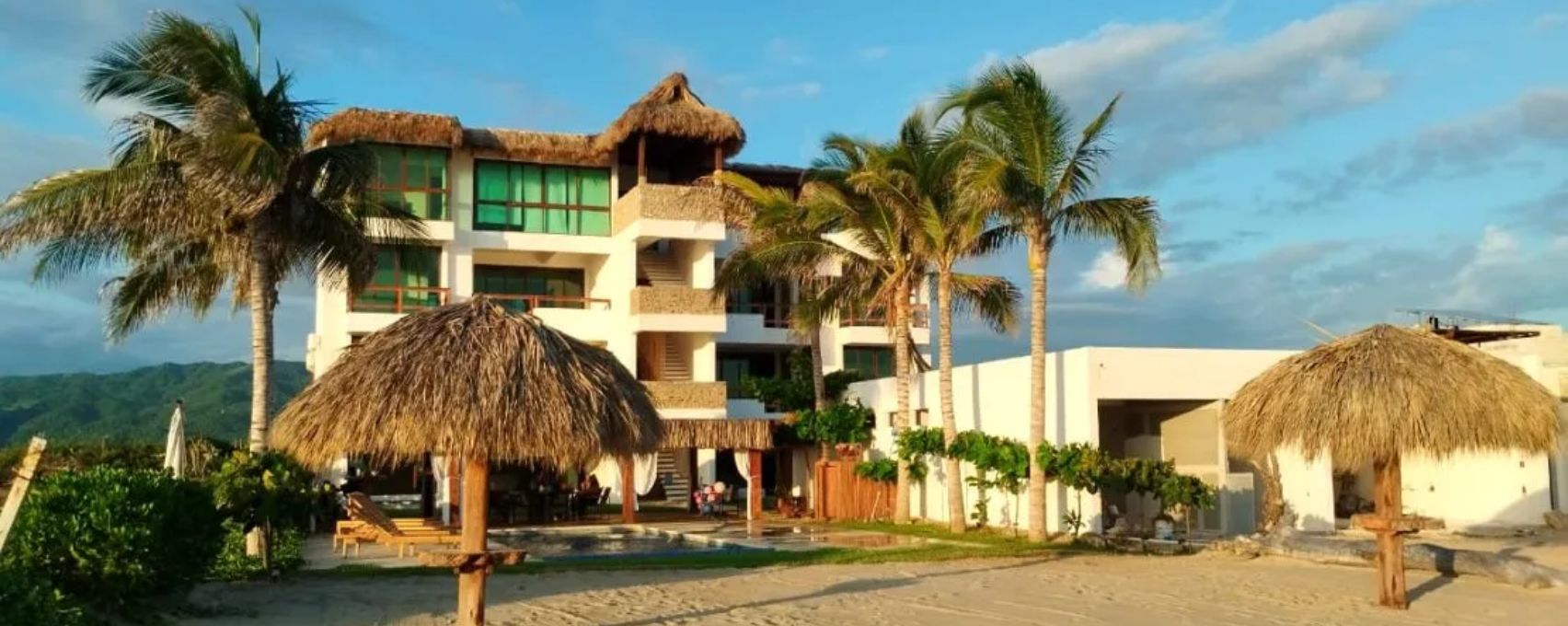
Beachfront properties offer unmatched lifestyle appeal and strong short-term rental potential during the dry season. The trade-off is elevated exposure to storm surge, salt air corrosion on structural materials, and higher maintenance costs year-round. Buyers pursuing beachfront acquisitions should budget explicitly for regular repainting, corrosion-resistant hardware, and more frequent structural inspections than would be required for inland properties.
Inland properties in neighborhoods like Bacocho, the airport corridor, or the hillside areas above the main tourist zones offer materially lower hurricane risk while remaining well within the daily convenience zone of the beach and town amenities. After recent storm seasons, these areas have seen accelerated appreciation from buyers who want coastal proximity without beachfront exposure. Both options have merit — the key is matching your risk tolerance and usage plan to the right location.
Property Types and Climate Suitability
| Property Type | Climate Considerations | Best For |
|---|---|---|
| Beachfront villas & homes | Higher storm risk, salt corrosion, premium insurance; high dry-season income | Experienced investors, vacation rental focus |
| Inland residential homes | Lower storm exposure, less maintenance; access to both seasons | Full-time residents, digital nomads, long-term rental |
| Apartments & condominiums | Shared maintenance costs, usually modern construction standards | First-time buyers, passive investment |
| Land plots | Drainage and topography essential evaluation criteria | Development projects, long-horizon investment |
Browse our specialized categories including houses and villas, apartments and condominiums, and land parcels to find the property type that aligns with your climate risk tolerance and investment goals.
Practical Buyer’s Calendar: When to Do What
Rather than treating the weather as a backdrop, experienced buyers integrate it into their purchase timeline. Here’s a practical framework for how the seasons should shape your strategy:
| Month | Activity | Reason |
|---|---|---|
| November – January | Initial market exploration and property viewings | Best conditions to experience the area at its most appealing; understand the rental market firsthand |
| February – April | Narrow shortlist, begin legal due diligence | Dry season peak; assess competition and realistic pricing |
| May – June | Negotiate and initiate purchase process | Shoulder season; some sellers more flexible; rainy season approaching |
| July – September | Structural inspection in rainy conditions; finalize notarial process | See property under challenging conditions; identify any maintenance issues before closing |
| October | Post-storm assessment if applicable; prepare for dry season activation | Final review before peak rental season begins |
Working with an experienced local agent is invaluable in calibrating this timeline to specific properties and neighborhoods. See our full resource on investing in real estate in Oaxaca for broader context on market fundamentals and the investment case for this region.
Construction Quality and Climate: Non-Negotiable Standards
Mexico’s building code framework gives considerable discretion to municipal governments, and coastal Oaxacan municipalities vary in the rigor of their regulatory oversight. This creates a wide spectrum of construction quality in the Puerto Escondido market. For buyers, this means that independent technical inspection is not optional — it is one of the most important steps in the purchase process.
According to AMPI (Asociación Mexicana de Profesionales Inmobiliarios), Mexico’s national association of real estate professionals, buyers working with certified agents benefit from established professional standards that help ensure proper disclosures around property condition and title status. When evaluating any property in a tropical coastal environment, a certified structural engineer or local architect familiar with Oaxacan construction practices should conduct a pre-purchase inspection. The relatively modest cost of a professional inspection is insignificant against the potential expense of discovering structural or drainage issues after purchase.
Sustainable construction features — solar power systems for grid resilience during storm-related outages, rainwater harvesting for water supply continuity, proper ventilation for humidity management, and native landscaping that stabilizes soil and reduces drainage pressure — increasingly represent both practical benefits and market value in Puerto Escondido’s evolving real estate ecosystem. Properties incorporating these features tend to perform better during the rainy season and recover more quickly after storm events. For more details on available investment opportunities, visit our hot sales page and browse current listings.
Frequently Asked Questions
Is the rainy season a bad time to visit Puerto Escondido for a property purchase trip?
Not at all. Many experienced buyers deliberately schedule a property visit during the rainy season to evaluate drainage, check for any water infiltration issues, and negotiate in a less competitive environment. Mornings are typically clear, afternoon rains are often brief, and you’ll get a far more realistic picture of how a property performs over the full year.
How does hurricane risk affect property insurance in Puerto Escondido?
Mexican property insurance for coastal areas exists and is broadly available, though premiums and coverage terms vary considerably based on construction type, location, and the insurer. Buyers should budget for property insurance from the outset and treat the availability of affordable coverage as a signal about a property’s climate risk profile. A property that is difficult or expensive to insure is communicating something about its exposure.
Do property values drop during the rainy season?
Asking prices don’t necessarily drop, but the negotiating dynamic shifts. Properties that rely on short-term rental income experience a quieter revenue period, and sellers who are actively motivated may be more flexible on price or terms between June and October. This seasonal pattern is one reason why experienced investors sometimes prefer to transact during the low season.
What construction features should I prioritize for a coastal property in Puerto Escondido?
Reinforced concrete structure, proper drainage throughout the property and roof, corrosion-resistant fixtures and hardware, elevated foundations in flood-prone zones, and impact-resistant windows or storm shutters are the key priorities. Post-2024 buyers are increasingly asking specifically about how a property performed during recent storm events, and well-prepared sellers should be able to provide that documentation.
How does climate affect short-term rental income potential?
The dry season (November–April) drives peak occupancy and the highest nightly rates. The rainy season reduces both, though the growing base of long-term residents and digital nomads provides a partial offset. Properties marketed to this year-round resident segment — emphasizing reliable internet, comfortable workspaces, and proximity to local services — tend to maintain more consistent occupancy than properties marketed exclusively to beach vacationers.
Conclusion
Puerto Escondido’s tropical climate is one of its defining assets — warm, sunny winters that attract visitors from around the world and generate real rental income for property owners. But like any coastal destination, the full picture includes a rainy season, periodic hurricane risk, and the very real question of how well a specific property was built to handle it all. The buyers who thrive in this market are those who engage with the climate honestly, time their due diligence strategically, and prioritize construction quality alongside location and lifestyle appeal. Ready to explore what’s available? Browse the Oaxaca real estate market and reach out for a consultation — we’re happy to walk you through the current inventory with this climate lens firmly in mind.
Disclaimer: This content is intended for informational purposes only and does not constitute legal, financial, or professional real estate advice. All buyers should consult qualified local professionals, including a licensed notary, legal advisor, and structural engineer, before completing any real estate transaction in Mexico.